
Concealed Hinges Explained: Full Overlay, Half Overlay and Inset
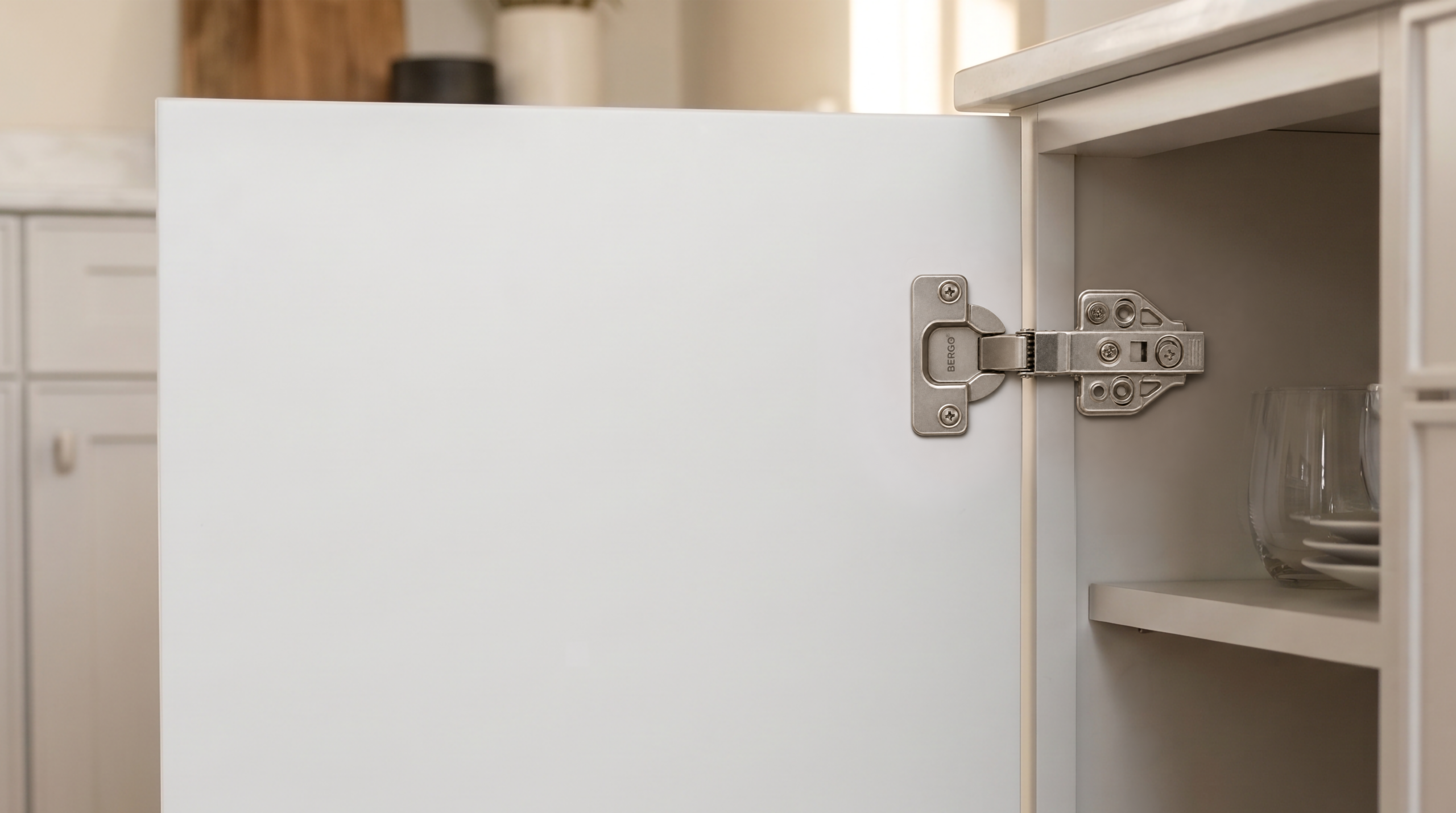
The concealed hinge is the most used fitting in any kitchen or wardrobe. It is hidden when the door is closed, it lets the door be adjusted after installation, and it decides how the door sits against the cabinet. Choosing the wrong type is one of the most common reasons for doors that do not line up. This guide explains the three main types and what to check before you order.
Types of concealed hinges: full overlay, half overlay and inset
- Full overlay: the door covers the full front edge of the cabinet side. This is the standard choice for most kitchen and wardrobe doors.
- Half overlay: two doors share one cabinet side (a middle partition), so each door covers half of the side panel. The hinge arm is cranked to make this possible.
- Inset: the door sits inside the cabinet opening, flush with the front of the cabinet. The hinge arm is cranked more strongly, and the gaps around the door must be even, so inset doors need more careful fitting.
The door position is decided by the hinge arm, not by the cup. All three types use the same 35 mm cup drilled into the door, so the door drilling does not change.
Choosing the opening angle: 110°, 165° or 90°
Most cabinet doors use a 110° hinge. It opens the door wide enough to reach inside comfortably and suits almost every standard cabinet. A 165° hinge opens the door almost flat against the next cabinet, which is useful for corner cabinets and for pull-out storage that needs the door fully out of the way. A 90° hinge is used for special cases such as inset doors and narrow openings.
Clip-on mounting and 3D adjustment
Clip-on hinges are fixed to a mounting plate on the cabinet side. The door can be clipped on and off without tools, which makes installation, painting and later maintenance much easier. 3D-adjustable hinges allow the door to be moved sideways, in depth and in height with a screwdriver, so the installer can line up all doors after the kitchen is fitted.
Soft-close or standard
Soft-close hinges have a built-in damper that slows the door in the last few centimetres, so it closes quietly. Standard hinges close without a damper and are used where cost matters most or where a separate damper is fitted.
Wood doors and aluminium-frame doors
Hinges for wooden doors are fixed into the door with screws. Aluminium-frame doors (for example glass doors in an aluminium frame) need hinges made for that frame. Always check which door type the hinge is designed for.
Concealed hinge checklist before you order
- Door position: full overlay, half overlay or inset
- Opening angle: 110° for most doors; 165° or 90° for special cases
- Door material: wood or aluminium frame
- Door thickness: check the range on the product page
- Soft-close or standard
- Matching mounting plate
The ESSENTIALS hinge range covers all of these options, with covers available for a neater look. Each product page shows the details and the technical data sheet.
Frequently asked questions
What are the three types of concealed hinges?
Full overlay, half overlay and inset. With full overlay, the door covers the full front edge of the cabinet side; this is the standard choice for most kitchen and wardrobe doors. With half overlay, two doors share one cabinet side, so each door covers half of the side panel. With inset, the door sits inside the cabinet opening, flush with the front of the cabinet.
Do full overlay, half overlay and inset hinges need different drilling in the door?
No. All three types use the same 35 mm cup drilled into the door, so the door drilling does not change. The door position is decided by the hinge arm, not by the cup.
Which opening angle do most cabinet doors need?
Most cabinet doors use a 110° hinge, which suits almost every standard cabinet. A 165° hinge opens the door almost flat against the next cabinet and is useful for corner cabinets. A 90° hinge is used for special cases such as inset doors and narrow openings.
Looking for ESSENTIALS hinges for your next project? See the full range of cabinet hinges. Trade customers can register online and, once approved, see estimate prices online. For a quotation, email sales@bergopro.com or send a WhatsApp message to +971 56 539 2001.